In the operation of Hong Kong site clusters, server configuration bottlenecks often lead to slow page loading, failed crawling, and reduced SEO performance. How does automated monitoring help identify configuration bottlenecks in Hong Kong site cluster servers? This article explains from the perspectives of metric collection, alert strategies, and performance analysis how to quickly pinpoint bottlenecks and support optimization decisions through continuous data-driven methods, helping operations and SEO teams improve site network stability and search engine visibility.
Automated monitoring provides constant, uninterrupted data flow and supports unified views across multiple data centers and nodes. For Hong Kong station clusters, automated monitoring covers traffic peaks, access distribution, and resource utilization, avoiding blind spots in manual inspections. Continuous monitoring enables early detection of abnormal trends, enabling early identification of configuration bottlenecks in the Hong Kong server cluster, shortening downtime for fault recovery, and improving overall availability.
Monitoring metrics should be set based on Hong Kong network characteristics, commonly including bandwidth throughput, latency, packet loss rate, TCP connection count, CPU/memory/I/O utilization, and application response time. For Hong Kong nodes, attention should also be paid to international link jitter, operator differences, and changes in access paths to accurately identify performance degradation caused by network or configuration, thereby more accurately identifying server configuration bottlenecks.
Automated alarms enable timely response by setting multiple thresholds (alerts, criticality, and recovery). For the Hong Kong site cluster, thresholds should be dynamically adjusted based on historical traffic and business windows, using composite rules and jitter tolerance mechanisms to reduce false positives, and alerts should include affected nodes and preliminary diagnostic information to help operations teams quickly locate and confirm whether the server is a configuration bottleneck.
Performance analytics transforms monitoring data into actionable insights. By aggregating and comparing metrics across different time periods, data centers, and instances, it is possible to determine whether the bottleneck is concentrated on a single server, a specific type of resource, or a network link. Based on the analysis results, it can be decided to adjust instance specifications, optimize network routing, or improve load balancing, thereby targeting the alleviation of server configuration bottlenecks in the Hong Kong site cluster.
Network issues are especially common in Hong Kong site clusters. Automated monitoring can continuously measure round-trip latency, jitter, and throughput, combined with routing tracing and segmental delay analysis to quickly identify bottlenecks caused by edge devices, ISP links, or internal server room exchanges. After positioning, issues can be alleviated by adjusting bandwidth, optimizing BGP routing, or upgrading link equipment.
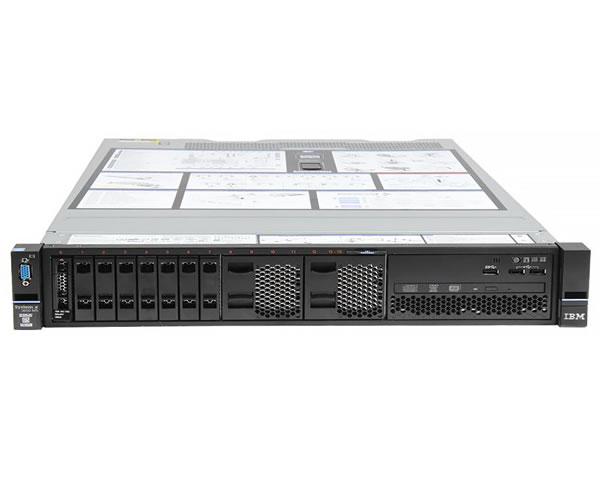
Resource-level analysis identifies CPU exhaustion, memory leaks, or I/O contention by sampling process-level metrics, context switching, and disk queue depth. Automated monitoring can also link these metrics with application performance metrics to determine whether performance issues are caused by insufficient configuration (such as specifications or thread pool settings) or code flaws, thereby guiding scaling or configuration optimization decisions.
Applications and databases are often hidden sources of bottlenecks. By automating the tracking of request links, slow interface rankings, and database lock waiting, monitoring can reveal performance degradation caused by connection pool depletion, missing indexes, or cache failures. Based on these findings, targeted adjustments can be made to database connection pools, caching strategies, or query optimizations to reduce the immediate pressure on server configuration.
Key implementation points include reasonable sampling frequency, a unified labeling system, and multi-layer visual dashboards. For the Hong Kong station cluster, distributed collection points should be deployed, with both short-term high-precision and long-term trend data retained, combined with automated playback and capacity estimation. Incorporating alerts into operations and maintenance processes and change approvals enables closed-loop governance from monitoring and discovery to configuration adjustment, continuously reducing server configuration bottleneck risks.
Summary: Automated monitoring is the core method for identifying and locating server configuration bottlenecks in Hong Kong site clusters. It is recommended to establish an indicator system covering networks, hosts, and applications, adopt dynamic threshold and root cause analysis processes, and incorporate monitoring results into capacity planning and change processes, forming a closed loop from discovery to remediation. Through continuous data-driven optimization, site cluster stability and search engine performance can be significantly improved.
- Latest articles
- Analysis Of Common Causes Of Unresponsive Singapore Server And Network Troubleshooting Guide
- Cost Estimation And Implementation Steps For SMEs Migrating To SoftBank VPS In Japan
- How Automated Monitoring Helps Identify Configuration Bottlenecks In Hong Kong Server Clusters
- Low-latency Encoding Optimization Is Best Practice For Live VPS In Malaysia
- Enterprise Case Studies Share The Performance Improvements After Using Japan's SoftBank Direct Server Connection
- Operations And Maintenance Manual: Key Points For Monitoring Backup And Fault Recovery Of VPS Networks In Silicon Valley, USA
- E-commerce And Gaming Acceleration Practical Tips To Boost Thailand's VPS Access Speed
- How To Achieve Rapid Deployment Of Overseas Lightweight Applications Based On Singapore's CN2 VPS
- How To Choose A High-speed Thai Server With Suitable Bandwidth To Reduce Network Congestion
- Why Choose A Server In Germany As The Traffic Center For The European Node?
- Popular tags
-

Recommend A Few High-performance Hong Kong Server VPS Options
This article recommends several high-performance Hong Kong server VPS options to help users find the most suitable virtual private server. -

Operation And Maintenance Recommendations Ensure That Stable Performance Can Be Maintained Under Unlimited Packages Of Hong Kong Site Cluster Servers
operation and maintenance recommendations for hong kong cluster servers with unlimited packages cover architecture optimization, monitoring and alarming, bandwidth and network, resource isolation, caching strategy, load balancing, security reinforcement, log and capacity planning and disaster recovery drills to help ensure stable performance. -

Shopping Guide And Recommendations For Hong Kong Computer Room Souvenirs
explore the hong kong computer room souvenir buying guide to learn about suitable souvenir recommendations to help you choose meaningful gifts easily.